
Key Takeaways
Obtain a Salt Lake City business license for your rental property and enroll in the Good Landlord Program to reduce licensing fees by up to 95 percent.
Set rent based on current market comps, not your mortgage payment, to stay competitive in a flat-rent market where vacancy costs money every single day.
Screen tenants thoroughly using consistent criteria: credit and income verification, criminal background checks, and prior eviction history to avoid costly placement mistakes.
Transition your homeowner's insurance to landlord insurance before listing, which protects the building structure but requires separate coverage for liability and loss of rent.
Inspect the property, complete rent-ready repairs, and document everything before a tenant moves in to establish baseline condition and protect your security deposit.
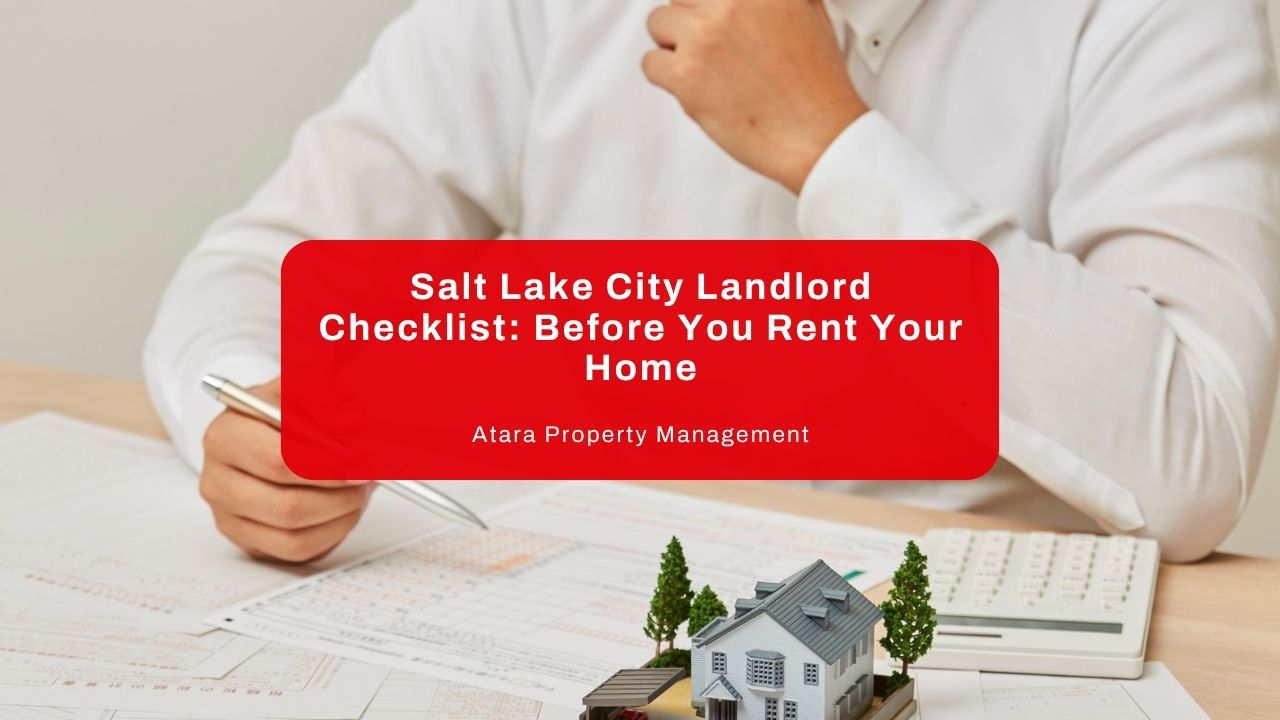
Turning your Salt Lake City home into a rental property involves more than posting an ad and collecting rent. First-time landlords face a sequence of legal, financial, and operational decisions that determine whether a property generates steady income or becomes a source of unexpected costs and stress.
Salt Lake City has specific requirements for rental owners, from business licensing to disclosure rules, and the market itself has changed. Rents have flattened after years of growth, which means vacancy costs more and tenant retention matters more than ever.

Atara Property Management works with owner-investors along the Wasatch Front who are making this transition, and the checklist below walks you through the steps before you list your home, covering what the law requires, what your property needs, how to price it correctly, and how to screen tenants so the right person moves in.
Secure Your Salt Lake City Business License and Good Landlord Status
Salt Lake City requires a business license for every residential rental property, including single-family homes and two-unit buildings. The city issues licenses annually, and you'll need one before you can legally rent.
The fee structure matters here because Salt Lake's Good Landlord Program discounts the per-unit licensing fee by up to 95 percent for participating owners.
To qualify for the Good Landlord discount, you must complete a landlord training course, pass a criminal background check, and commit to maintaining the property to code. The training takes a few hours, the background check is straightforward, and the maintenance commitment is simply good practice anyway.
The payoff is significant: instead of paying the full annual licensing fee, you pay a fraction of it. You'll renew annually, so this discount compounds. Apply through the city's business licensing office online or in person. Have your property address, ownership documentation, and Social Security number ready.

If your rental sits in a neighboring city like South Salt Lake, North Salt Lake, or Draper, check that city's licensing and Good Landlord requirements separately. Each city runs its own program with similar structures but different fee levels and training providers.
Understand Lead Paint Disclosure and Rental Disclosures
If your home was built before 1978, federal law requires you to disclose the presence or absence of lead-based paint hazards to every prospective tenant.
This disclosure must happen before the tenant signs the lease, and you must give the tenant ten days to conduct a lead inspection if they wish. Provide the EPA's lead disclosure pamphlet and keep signed acknowledgment of the disclosure in your records.
Utah law also requires landlords to disclose material facts about the property that affect its value or desirability: structural defects, water damage, mold, pest infestations, prior criminal activity on the property, and proximity to methamphetamine contamination sites.
If you don't know whether your property was a meth lab, contact the Utah Department of Health and Human Services for a records check. Disclose honestly and in writing. Failure to disclose is grounds for lease termination and can expose you to liability.
Get the Right Insurance Before You List
Your homeowner's insurance does not cover rental income or landlord liability. The moment you rent the property, your homeowner's policy may become void. Switch to landlord insurance, which protects the building structure and your liability as a property owner but does not cover loss of rent if a tenant stops paying.

Landlord insurance typically includes dwelling coverage (the structure), liability protection (if someone is injured on the property and sues), and coverage for vandalism or theft. It does not cover the tenant's personal property or loss of rent during vacancy or non-payment. To protect against loss of rent, you need a separate rider or a standalone loss-of-rent policy.
Inspect and Prepare the Property for Rent-Ready Condition
Before you list, walk the property and document its condition with photos and notes. This baseline protects you if a tenant claims pre-existing damage when they move out. Make a list of everything that needs repair or replacement, and anything else a prospective tenant will notice or that poses a safety risk.
Complete the repairs now. Rent-ready means the property is clean, all systems work, and nothing is broken. A property that is not rent-ready will either sit vacant longer while you negotiate repairs with a tenant or will attract lower-quality applicants who are willing to accept substandard conditions.
Price Your Rent Using Market Comps, Not Your Mortgage
The biggest mistake first-time landlords make is pricing rent to cover their mortgage payment plus a target profit. That is backwards. Rent is set by the market, and the market in Salt Lake City is flat. Pricing too high costs you days on the market and lost income.
Use market comps to set rent. Look at similar properties in your neighborhood that are currently listed or recently leased. Check rent-listing sites like Zillow, Apartments.com, and Craigslist. Note the rent, property type, bedrooms, bathrooms, condition, and lease terms.

If your three-bedroom, one-bath home in Sugar House is similar to a comp that just leased for $2,100 per month, price yours at $2,100 or slightly below if you want to lease faster. If you price at $2,300 hoping to negotiate down, you will sit vacant longer and lose money.
Every vacant day costs you rent. If your property should rent for $2,000 per month and sits empty for an extra ten days because you overpriced by $200, you've lost $667 in rent and gained nothing.
Create a Tenant Screening Plan
Tenant quality determines whether you collect rent on time, whether the property is maintained, and whether you face an eviction. Screen every applicant using consistent criteria applied equally to all.
Require a completed rental application with the applicant's full name, contact information, employment history, prior rental references, and authorization to conduct a background check and credit check.
Pull a credit report and criminal background check on every applicant. A single missed payment or old eviction does not automatically disqualify someone in Utah, but a pattern of non-payment or recent evictions is a red flag.
Check criminal history for felonies and misdemeanors. Utah law allows you to consider criminal history but requires individualized assessment; do not use a blanket policy that automatically rejects anyone with a record.

Call prior landlords and ask about rent payment, property condition, and lease compliance. If a landlord says the applicant left owing rent or damaged the property, that is a strong signal to decline. Verify employment by calling the employer directly or checking recent pay stubs. Income should be at least three times the monthly rent to ensure the tenant can afford it.
Set a minimum credit score and stick to it. Many landlords use 620 as a floor, though you can set it higher if your market allows. Document your screening criteria in writing and apply them consistently to every applicant. This protects you legally and ensures you are not making subjective decisions that could expose you to fair housing claims.
Draft a Lease That Protects You
Use a Utah-compliant lease template or hire a real estate attorney to draft one. Do not use a generic lease from another state. Your lease must specify the rent amount, due date, late fees, security deposit amount, pet policy, maintenance responsibilities, entry rights, and lease term.
Utah law allows you to charge a non-refundable pet fee separate from the security deposit, which many landlords use to offset potential pet damage. You can also charge a late fee if rent is not paid by the due date, but the fee must be reasonable and cannot exceed the actual cost of processing a late payment. Document late fees in the lease so there is no dispute later.

Specify that the tenant is responsible for routine maintenance and minor repairs, while you are responsible for major systems and structural repairs. Clarify who pays for utilities, trash, and snow removal.
Include language about entry rights: Utah law allows landlords to enter for repairs, inspections, and showings with 24 hours' notice, except in emergencies. Put it in the lease so there is no confusion.
Have the tenant sign and date the lease and keep a copy in your records. Take photos of the property condition on move-in day and have the tenant sign off on the move-in inspection. This protects you both.
Collect a Security Deposit and Document It
Utah law allows you to collect a security deposit, typically one month's rent or more depending on the lease. The deposit is held in trust and must be returned within 30 days of move-out, minus any legitimate deductions for unpaid rent or damage beyond normal wear and tear.
Prepare for Seasonal Maintenance and Emergencies
Salt Lake City has distinct seasons, and each brings maintenance risks. In winter, frozen pipes, ice dams, and furnace failures are common. Have the furnace serviced before November and ensure the property is winterized: drain outdoor faucets, insulate exposed pipes, and check the roof for damage that could lead to ice dams.

In spring, start up the sprinkler system and service the swamp cooler if you have one. In summer, air conditioning and swamp cooler failures spike, and wildfire smoke can affect air quality. Have a plan for full rent-ready preparedness, emergency repairs, and know who to call.
Bottom Line
Atara Property Management helps owner-investors along the Wasatch Front handle this checklist and the ongoing management that follows. If you want to run the numbers on your property's potential rent and all-in annual costs, use the free rental analysis tool to see what your home could earn.
Frequently Asked Questions About First-Time Landlord Requirements in Salt Lake City
What Is the Difference Between Landlord Insurance and Homeowner's Insurance?
Homeowner's insurance covers your home if you live in it and protects you if someone is injured on the property. Landlord insurance covers the building structure and your liability as a property owner, but it does not cover the tenant's personal property or loss of rent if the tenant stops paying.
How Do I Know What Rent to Charge for My Salt Lake City Home?
Use market comps, not your mortgage payment, to set rent. Look at similar properties in your neighborhood that are currently listed or recently leased on Zillow, Apartments.com, and Craigslist. Note the rent, property type, bedrooms, bathrooms, condition, and lease terms.
What Should I Look for When Screening Tenants?
Screen every applicant using consistent criteria: require a completed rental application, pull a credit report and criminal background check, verify employment and income (income should be at least three times the monthly rent), and call prior landlords to ask about rent payment and property care.
Do I Need to Disclose Lead Paint Before Renting My Home?
Yes, if your home was built before 1978, federal law requires you to disclose the presence or absence of lead-based paint hazards to every prospective tenant before they sign the lease. You must provide the EPA's lead disclosure pamphlet and give the tenant ten days to conduct a lead inspection if they wish.
What Happens to the Security Deposit After the Tenant Moves Out?
You must return the security deposit within 30 days of move-out, minus any legitimate deductions for unpaid rent or damage beyond normal wear and tear. Keep the deposit in a separate account and do not spend it. When the tenant moves out, inspect the property, photograph any damage, get repair estimates if needed, and document your deductions.